Commercial Flooring Services | Somar Epoxy Flooring
Skip to content

Commercial floors

Warehouses, auto shops, kitchens, showrooms, and offices across the Houston area. Specced to the traffic, phased around your hours, diamond-ground first.

Commercial and industrial

Warehouses, auto shops, kitchens, and showrooms, scheduled around your hours so the doors stay open.

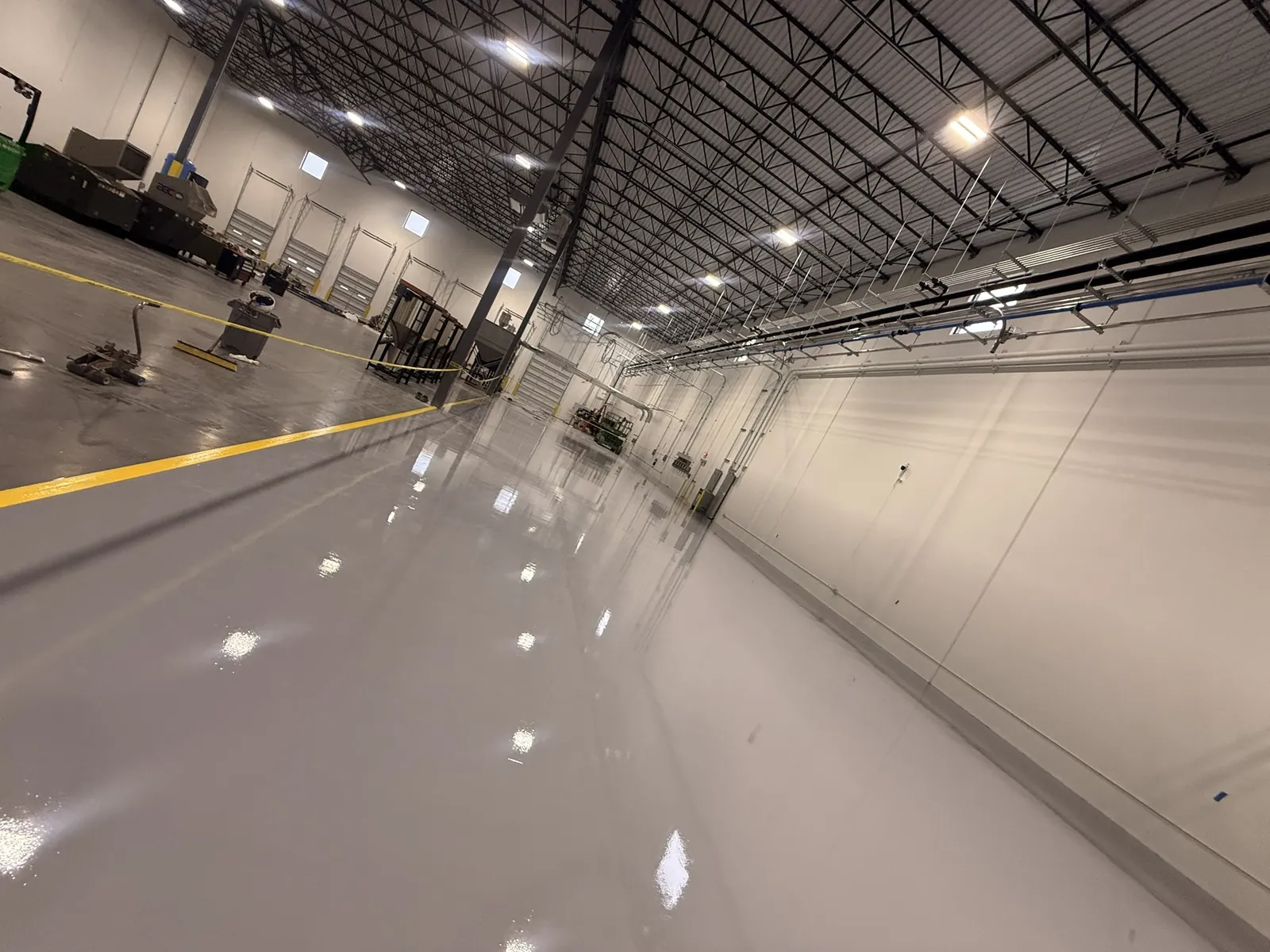
Commercial floors need to survive forklifts, chemicals, hot water, and constant traffic. We spec the system to the space: high-build epoxy where impact matters, chemical-resistant topcoats for shops and kitchens, and a clean solid-color finish for showrooms.

We work nights and weekends when that is what the schedule needs, and we phase larger floors so part of the space stays in use.

Good for
WarehousesAuto shopsRestaurant kitchensRetail and showroomsOffices
Finishes
Solid colorFlakePolished concrete
Get a quote
Warehouse floor in solid grey epoxy with a yellow safety line running down itSolid grey epoxy

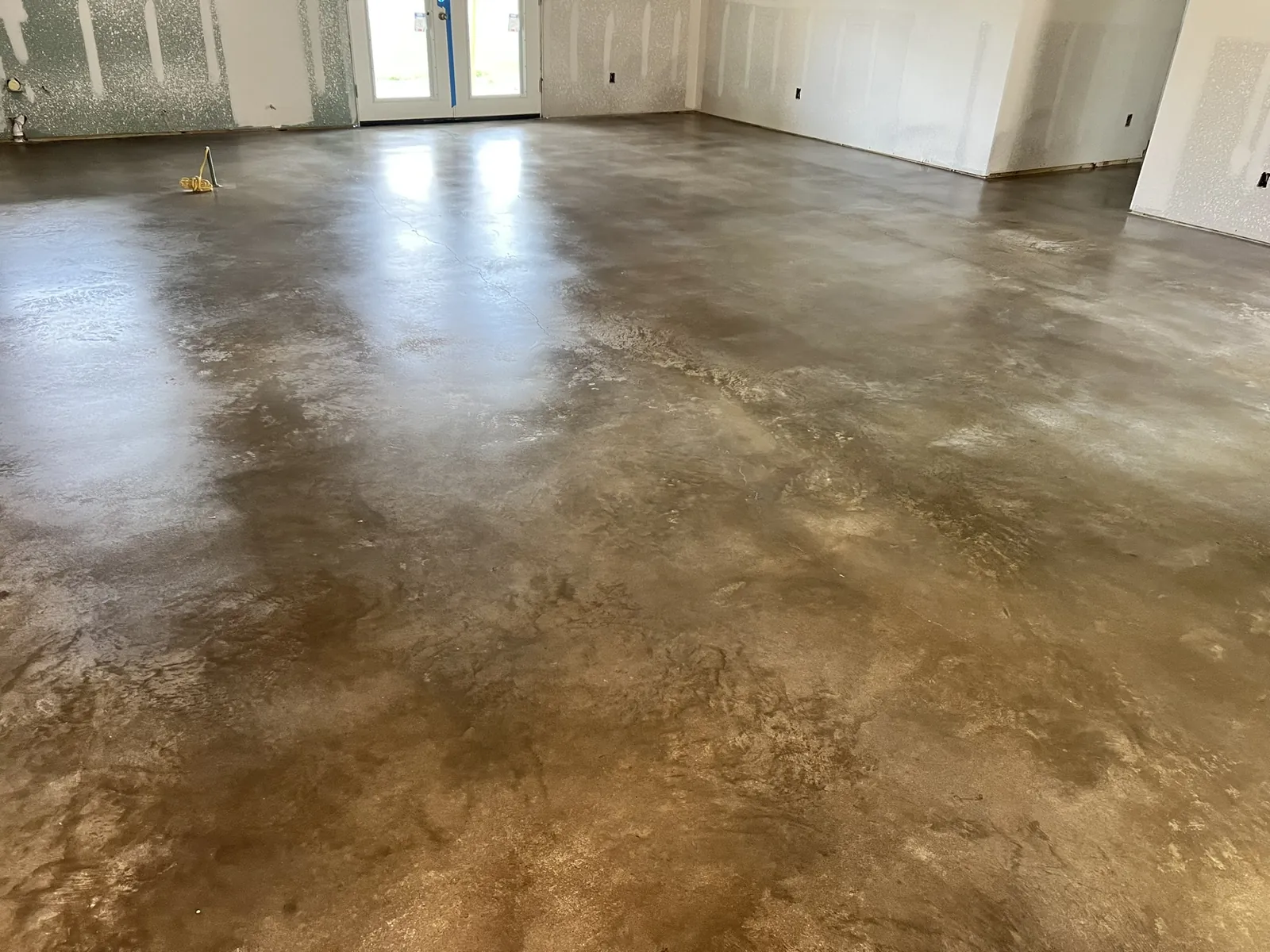
Polished concrete

Ground and polished slabs for a clean, low-maintenance commercial floor.

Polished concrete is the slab itself, ground through progressively finer diamonds, densified, and polished to the sheen you want. Nothing to peel, nothing to recoat.

It fits warehouses, retail, and offices that want a bright floor with the lowest upkeep. We can dye it, leave it natural, or add a guard coat for stain resistance.

Good for
WarehousesRetailOfficesBreweries and event spaces
Finishes
MatteSatinHigh gloss
Get a quote
Open floor in polished and sealed concrete, mottled tan and grey, walls still unfinishedPolished and sealed concrete

Flake systems

The workhorse finish. Hides dust, hides wear, and comes in dozens of color blends.

A flake floor is a pigmented base coat with vinyl flakes broadcast to full coverage, scraped smooth, and sealed. The result is a granite look with a light texture that is easy to sweep and hard to stain.

Pick a blend that matches the house, the cabinets, or the truck. Full flake is the standard. Ask about a partial broadcast for a quieter look.

Good for
GaragesPatiosLaundry roomsShops
Finishes
Full flakePartial flakeCustom blends
Get a quote
Gravel flake blend, close upGravelFB-414
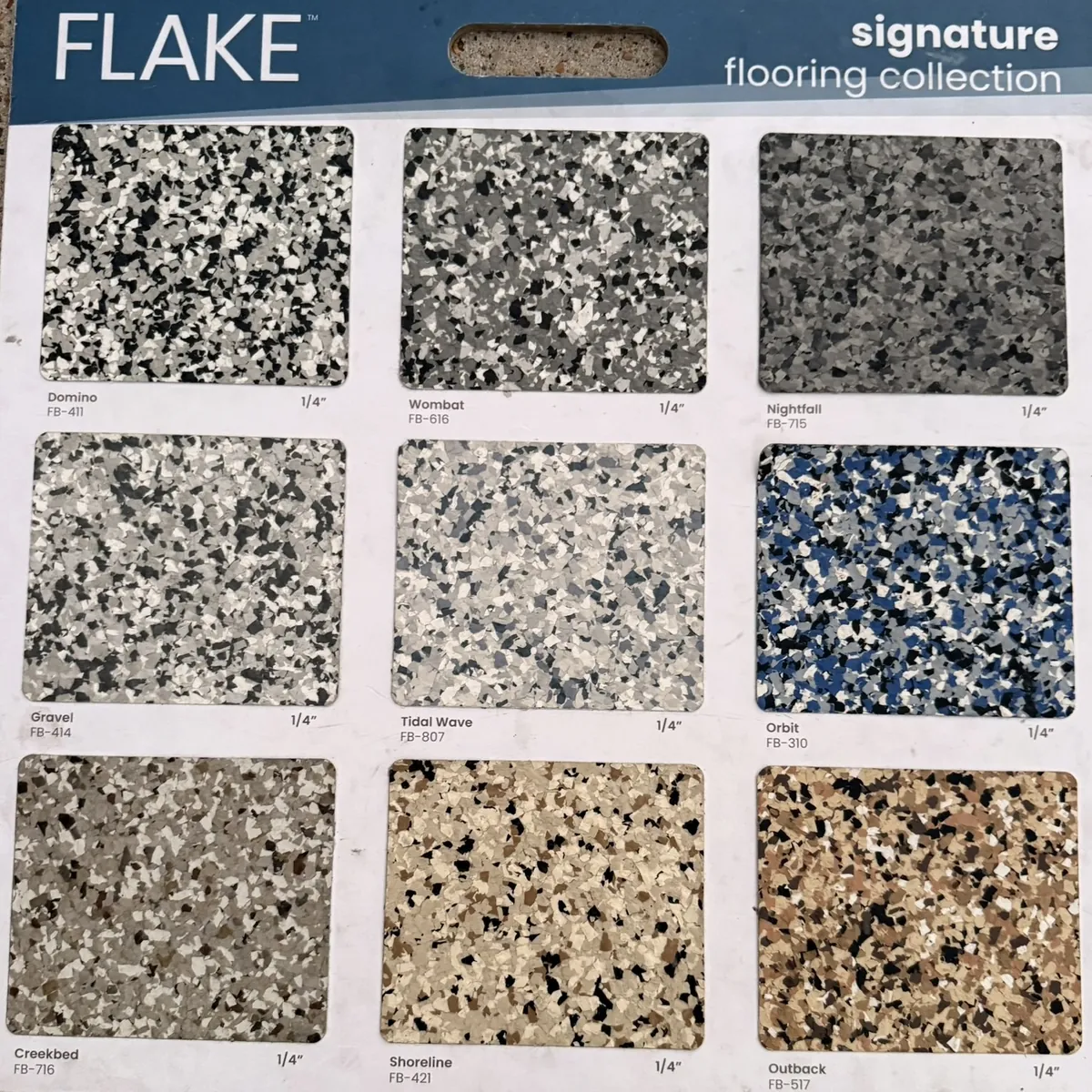
Pick a blend

Nine blends on the truck. Tap one to see it up close.

Flake sample board with nine blends
The board on the truck. All nine, quarter-inch flake.

Metallic and decorative

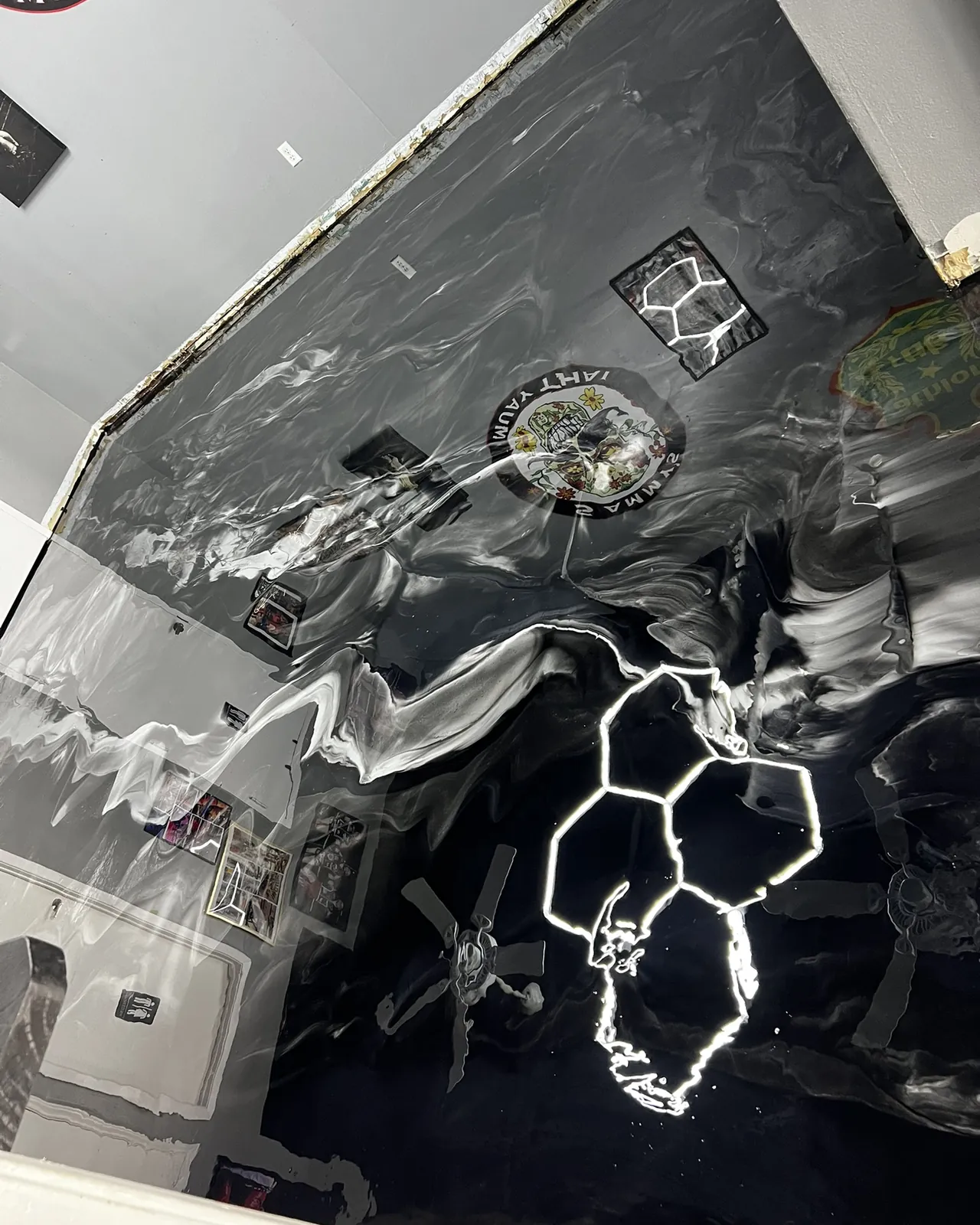
One-of-a-kind floors. Metallic pigments moved by hand, so no two square feet match.

Metallic epoxy is poured, not rolled. Pigments are worked across the floor with brushes and blowers, so the finish reads like stone, water, or smoke depending on the colors and the hand behind it.

It is the pick for showrooms, living spaces, and the garage that doubles as a lounge. Every metallic floor is sealed under a clear polyaspartic coat so the depth stays and the shine does not scratch off.

Good for
ShowroomsLiving areasMan cavesSalons and studios
Finishes
Two-tone metallicThree-tone metallicCustom blends
Get a quote
Black and white metallic epoxy floor at Sammy's Muay Thai, gloss deep enough to mirror the hex lightsMetallic epoxy

How we keep you open

A phased warehouse floor from the manager's side of the schedule.

  1. Before we start

    Walkthrough and zones

    Victor walks the floor with you, splits it into zones, and books the nights around your shifts.

  2. 1
    Night 1

    Zone A: grind and coat

    Racking moved, slab ground and repaired, base coat down. Zone B keeps working.

    Zone B open
  3. 2
    Night 2

    Zone A sealed, Zone B ground

    Topcoat on A. B gets its grind, its repairs, and its base coat.

    Keep off
  4. 3
    Night 3

    Zone B sealed

    Topcoat on B. Every seam ties in so the floor reads as one surface.

  5. Next morning

    Foot traffic on both zones

    Crew walks, carts roll, the doors open on time.

    Walk on
  6. 48 hours later

    Forklifts and racking back

    Full load once the topcoat has hardened through.

    Forklifts

How a commercial floor gets done without closing the doors

Four steps, phased around your hours.

01

Walk

Victor walks the space with you: square footage, the floor that is there now, moisture, traffic, and the hours we can have it.

02

Spec

The system gets matched to the floor. High-build epoxy where impact matters, chemical-resistant topcoats for shops and kitchens, polished concrete where upkeep matters most.

03

Phase

The floor is split into zones and scheduled around your operation. Nights, weekends, one bay at a time, so part of the space is always working.

04

Open

Cure windows are planned so you open on time. Foot traffic in hours, carts the next day, forklifts and racking in about 48.

Questions facility managers ask before they sign

Straight answers. If yours is not here, call or email and Victor will give you one.

Usually. The floor gets split into zones and each zone goes in over a night or two while the rest keeps running. Nights and weekends are the normal schedule for commercial work, not the exception.

A typical zone is out of service for two nights. Foot traffic the next morning, carts and pallet jacks after a day, forklifts and racking after about 48 hours. The bid comes with a zone-by-zone schedule.

High-build epoxy takes impact and point loads, a chemical-resistant polyaspartic topcoat takes hot water, oil, and cleaners, and polished concrete takes the most traffic with the least upkeep. Victor specs the system to the floor after the walkthrough.

Coat it when you need a sealed, easy-to-clean surface in a color: shops, kitchens, showrooms. Polish it when the slab is sound and you want the lowest upkeep floor for a warehouse, retail, or office. Both start with a diamond grind.

Yes. Wet areas get a grit broadcast in the topcoat sized to the traffic, from a light texture at a front counter to a heavier one in a kitchen line or a wash bay.

Send the square footage, what is on the floor now, and the hours we can have it. Victor walks the space or scopes it from plans and photos, then sends a written bid with the system, the phasing, and the schedule within 48 hours.

Yes. Email drawings, a spec sheet, or a walkthrough video and Victor prices against it. If the spec calls for something the slab cannot support, he says so before you sign.

You get a cleaning sheet with the handover: what to mop with, what to avoid, and when a recoat makes sense. Most commercial topcoats go years between recoats under normal traffic.

Have a floor that can't close?

Tell us the square footage and the hours you can give us. Victor phases it and sends a bid.